

Gastric Bypass
.
Real change begins when you decide your life deserves more. Gastric bypass isn’t just a surgical procedure—it’s a gateway to better health and a lighter, more vibrant life. For millions of people around the world, it has been the long-awaited turning point after years of unsuccessful attempts. Discover everything you need to know before making your decision.
What is gastric bypass?
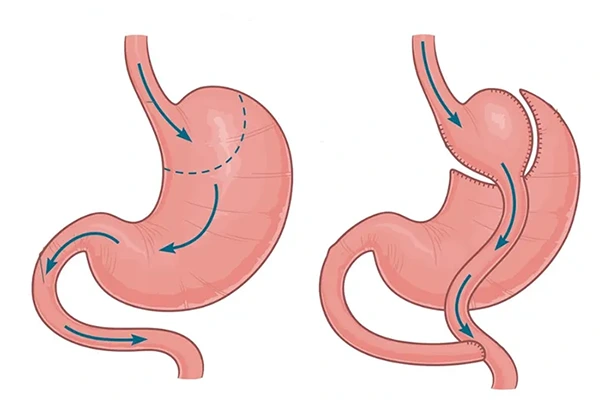
Gastric Bypass It is a surgical procedure in which the stomach is reduced in size and the intestines are rerouted in order to reduce the amount of food that can be eaten and reduce the absorption of calories and nutrients. In this procedure, the stomach is divided into a small section, usually the size of a walnut, which connects directly to the middle part of the small intestine, bypassing the larger part of the stomach and intestines.
The result? Feeling full more quickly, eating smaller amounts, and noticeable weight loss.
Who is eligible for gastric bypass surgery?
To determine whether a person is eligible for this procedure, several health factors are usually considered, including:
- Body Mass Index (BMI):
A person is considered a candidate for the procedure if their body mass index (BMI) is 40 or higher, meaning they are obese. People with a BMI between 35 and 39.9 may also be eligible if they have obesity-related conditions. - Failure of traditional methods of weight loss:
People who have tried other methods of losing weight such as diet, exercise, or medications and have not had lasting success in losing weight. - General health condition:
The person must be healthy enough to undergo surgery. This requires a comprehensive medical evaluation that includes the absence of serious illnesses such as serious heart disease or advanced cancer. - Commitment to lifestyle change:
People who are willing to make radical lifestyle changes after surgery, including following a healthy diet after surgery, exercising regularly, and following up with doctors and nutritionists. - the age:
It is preferable for the patient to be between the ages of 18 and 65, but in some cases younger or older people may be excluded if the benefits outweigh the risks.
How to prepare for gastric bypass surgery:
- Medical consultation with a surgeon to evaluate the condition and determine surgical options.
- Medical tests such as blood tests and evaluation of heart and lung health.
- Change your diet to a low-calorie diet to reduce the size of your liver.
- Quit smoking and alcohol to improve recovery and speed healing.
- Psychological preparation for lifestyle changes with the help of a nutritionist or psychologist.
- Fasting before surgery by abstaining from food and drink for several hours.
- Arrange the recovery period and prepare a comfortable environment and appropriate meals.
- Family support to help during recovery after surgery.
Procedures for gastric bypass surgery, both complete and mini:
The procedure, in both of its types, is performed under full general anesthesia. Surgeons typically use laparoscopic techniques through small incisions in the abdomen, which reduces pain and speeds up recovery.
Full gastric bypass
In a complete gastric bypass, the stomach is divided into a small portion (about 10% of its original size) to restrict the amount of food, and this small portion is then connected to the middle part of the small intestine, bypassing the larger portion of the stomach and intestine. This type is the most common and is often used for people who are extremely obese and have related health problems such as diabetes.
Mini gastric bypass
In the mini gastric bypass, the procedure follows similar steps, where the stomach is made smaller, but the surgeon connects it to a slightly more distant part of the small intestine using only one connection. This type is simpler and less complicated, requires less surgery, and carries fewer risks for some patients. However, the mini gastric bypass may be less effective for long-term weight loss than the full gastric bypass.
After the connections are completed, the surgical incisions are carefully closed. Both types help in achieving weight loss, but the choice of the appropriate type varies depending on the patient's health condition and the surgeon's recommendations.
How long does it take to fully recover after gastric bypass?
Initial recovery from surgery usually takes 3 to 6 weeks, during which the patient can gradually return to daily activities. However, the patient needs regular follow-ups for up to 6 months or more to ensure full adaptation to the physical changes and new diet.
Benefits and advantages of gastric bypass surgery:
Among the most prominent and important benefits this procedure offers:
Effective weight loss:
Gastric bypass is one of the most effective weight loss surgical procedures. Patients can lose up to 60-80% of their excess weight within the first year to two years after surgery, which can greatly improve their overall health.
Improvement of diseases associated With obesity:
Gastric bypass helps improve or even cure many diseases associated with obesity, such as:
- Type 2 diabetes: Patients are often able to control their blood sugar levels or get off medications completely.
- High blood pressure: It reduces the pressure on the heart and arteries, which reduces the risk of heart disease.
- Sleep Apnea: Reduces sleep problems and promotes healthy breathing.
- High cholesterol: It helps lower bad cholesterol levels, which protects the heart.
Improving quality of life:
Patients feel an increase in their level of activity and vitality after surgery, allowing them to perform daily activities with greater ease. The procedure also enhances self-confidence and personal satisfaction as a result of the improved physical appearance and shape.
Increase the chances of pregnancy and improve reproductive health:
For women, surgery can help improve fertility and reduce problems with PCOS, increasing the chances of a healthy pregnancy. However, it is recommended to wait 12 to 18 months after the procedure before trying to conceive.
Life after gastric bypass:
Life after gastric bypass requires commitment to major lifestyle changes to ensure the success of the surgery and achieve the desired health benefits.
Dietary changes:
After surgery, the patient needs to follow a special diet consisting of small meals divided throughout the day. The diet begins with liquids, then gradually moves to soft and then solid foods. Foods high in sugar and high in fat should be avoided to avoid dumping syndrome.
Physical activity:
Physical activity becomes an essential part of a patient's life after surgery. It is recommended to start light exercise after gradual recovery to increase physical fitness and help with weight loss and maintenance.
Follow up with your doctor
It is important to follow up with the doctor regularly to ensure that the surgery is going well and to deal with any complications that may arise. The patient must also commit to taking vitamins and nutritional supplements to compensate for any deficiencies that may occur due to poor absorption of nutrients.
Permanent lifestyle modification:
The patient must adapt to a new lifestyle that includes permanent changes in diet and physical activity. Success depends on continued commitment to the changes that occur after surgery.
What are the risks of gastric bypass surgery?
Like any surgical procedure, gastric bypass surgery is not without risks that should be carefully considered before making a decision. In the short term, patients may face complications such as bleeding, infection, or leakage from the surgical connection sites.
In the long term, one of the main issues patients may encounter is a deficiency in vitamins and minerals such as iron, vitamin B12, and calcium, due to reduced nutrient absorption by the body. Additionally, dumping syndrome may occur when consuming large amounts of sugar or fats, and it can manifest through symptoms such as nausea, dizziness, and diarrhea.
Can weight be regained after surgery?
Yes, it is possible to regain some weight if the patient does not adhere to a healthy lifestyle after surgery, including following a proper diet and regular physical activity. Surgery is an effective tool for weight loss, but success depends on continued adherence to medical and nutritional instructions.
What is the difference between gastric bypass, gastric sleeve, and gastric balloon?
Gastric Balloon is the least invasive option. It involves placing a temporary device inside the stomach to reduce appetite without surgery. It is suitable for people with mild to moderate overweight.
While Gastric Sleeve is a permanent surgical procedure that removes a large portion of the stomach, making it smaller in size. This reduces food intake and appetite, and it is a common option suitable for a wide range of patients.
Gastric Bypass is the most powerful of the three. It not only reduces the size of the stomach but also reroutes the digestive system, which decreases nutrient absorption and leads to greater weight loss. It is considered the best option for severe obesity or obesity associated with chronic diseases such as diabetes.
Finally:
In the end, gastric bypass is not just a surgical procedure that ends in the operating room; it is a starting point toward a different life worth living. True success is not measured by the kilograms that disappear from the scale, but by the habits you build and your commitment to them every day. If you are considering this step, know that surgery opens the door—but you are the one who walks through it.
 Arabic
 English