

Abdominal Liposuction
.
Belly fat is one of the most common and difficult problems to get rid of, even with diet and exercise. Therefore, many people turn to Abdominal Liposuction as an effective cosmetic solution to remove localized fat and improve body contour. With advancements in technologies like laser and VASER, it has become possible to achieve more precise results and a shorter recovery period. In this article, we explain the most important liposuction techniques, their advantages and disadvantages, and how to choose the most suitable option for you.
What is Abdominal Liposuction?
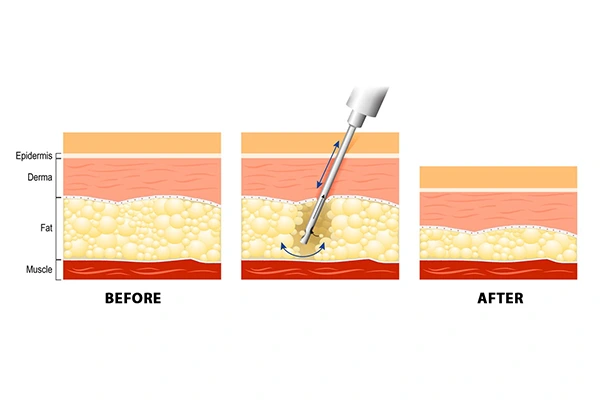
Abdominal Liposuction It is a cosmetic surgical procedure that aims to remove excess fat accumulated in the abdominal area using specialized suction techniques, such as a thin cannula, to improve the shape and symmetry of the abdomen. This procedure is not a substitute for weight loss, but rather aims to improve the physical appearance of people with fatty deposits that do not respond to exercise or diet.
Types of Abdominal Liposuction Techniques: A Comprehensive Comparison of the Available Options
There are 5 approved types ofLiposuction for the abdomen, here are the details:
Traditional technique (Liposuction):
This is one of the oldest and most common liposuction techniques. In this procedure, a surgical instrument called a “cannula,” a thin, hollow tube, is inserted through a small incision in the skin to access the fat deposits under the skin. A saline solution containing a local anesthetic and anti-bleeding medications is pumped into the targeted area of fat. The cannula is then moved under the skin to suck the fat out of the body.
Features:
It is effective for removing large amounts of fat from multiple areas of the body, including the abdomen, thighs, and arms. The procedure also allows the surgeon to precisely sculpt the body and improve its overall appearance.
Disadvantages:
Recovery may take a relatively longer period compared to other techniques. The procedure can leave bruising and swelling after surgery, and the patient may need to wear compression garments to aid in recovery.
Laser Liposuction:
This method relies on using a laser to break up and liquefy fat cells before suctioning them from the body. The laser sends thermal energy that melts the fat, making the suction process easier and less harmful to the surrounding tissues. This type is also known as “SmartLipo.”
Features:
Thanks to the heat of the laser, this technique can stimulate collagen production, which leads to skin tightening and improving its appearance after surgery. It is ideal for people who want to remove fat while achieving a skin-tightening effect.
Disadvantages:
Not suitable for removing large amounts of fat. This technique also requires great precision, and in some cases, you may need additional sessions to achieve the desired results.
Ultrasound-Assisted Liposuction (UAL):
This method relies on the use of ultrasound waves to break up fat cells and turn them into a liquid before suctioning them out. A device that emits ultrasound waves is inserted through a small incision in the skin. These waves melt the fat, making it easier to remove using a cannula.
Features:
This technique is ideal for dealing with fat that is heavily accumulated or difficult to remove using other techniques. It is also suitable for sculpting specific areas of the body such as the abdomen and waist for precise results.
Disadvantages:
This technique may require a longer time during the procedure and requires high skill from the surgeon to avoid burns due to the heat generated by the ultrasound waves.
Radiofrequency-Assisted Liposuction (RFAL):
Radio frequencies are used in this technique to heat and melt the fatty tissue under the skin, which is then easily suctioned out. This technique relies on the use of a device that emits radio frequency waves that stimulate tissue regeneration and skin tightening.
Features:
Effective in removing fat and tightening skin at the same time. This technique is ideal for people who want to improve the appearance of sagging skin in addition to removing fat.
Disadvantages:
It may require multiple sessions to achieve the desired results, and it is not recommended to remove large amounts of fat at once.
VASER Liposuction:
This technique relies on the use of low-frequency ultrasound waves to gently break up fat cells. VASER is a precise technique that aims to improve detailed body sculpting, as it works to dissolve fat without significantly affecting surrounding tissues such as blood vessels and nerves.
Features:
It is considered one of the most effective techniques for body sculpting and obtaining precise results. It also allows the removal of large amounts of fat while reducing the recovery period compared to other techniques.
Disadvantages:
It requires a higher cost compared to traditional techniques and requires a skilled surgeon to ensure optimal results.
How to choose the right technology?
Choosing the appropriate technique for abdominal liposuction depends on several factors, including:
- The amount of fat the person wants to remove.
- The condition of the skin and how loose it is.
- The goal of surgery, whether it's to enhance overall appearance or sculpt specific areas.
- The patient's overall health and medical condition.
Recovery period after traditional Abdominal Liposuction:
- The first few days after the surgery:
After the surgery, the patient might experience some pain, swelling, and bruising in the abdominal area, and these are normal symptoms. Pain relievers are prescribed to help alleviate these symptoms. It's advised to get plenty of rest during the first 48 hours post-surgery and to avoid strenuous physical activities. - Wearing compression garments:
After the procedure, compression garments must be worn continuously for 4-6 weeks. These garments help reduce swelling and support the skin in returning to its normal position, in addition to improving the results of body sculpting. - Back to daily activities:
Normal daily activities can be resumed after about one to two weeks, depending on the doctor’s instructions and the patient’s condition. It is also recommended to avoid exercise or strenuous activities for 4-6 weeks to ensure that complications do not occur. - Surgical incision care:
Surgical incisions must be kept clean and dressings changed regularly as instructed by your doctor to avoid infections or complications.
Helpful tips for recovery after Abdominal Liposuction:
- It is recommended to elevate your upper body when sleeping with pillows to improve blood circulation and reduce swelling.
- It is advisable to avoid saunas or hot baths during the first weeks after the operation as they may worsen the swelling and slow down the healing process.
- Drink plenty of water to support healing and reduce swelling, eat a healthy diet rich in protein and vitamins, and try to reduce the salt in your diet.
- In some cases, your doctor may recommend gentle lymphatic massage to help drain fluid and reduce swelling.
Is Abdominal Liposuction safe?
An Abdominal Liposuction is generally considered safe when performed by a board-certified, experienced plastic surgeon and in a medical setting. However, like any surgical procedure, there may be some risks involved. Safety depends on the selection of a qualified surgeon and the general health of the patient. Modern techniques such as lasers and ultrasound also help reduce complications. Potential risks may include swelling, bruising, infection, and bleeding, but these are rare when medical instructions are followed properly.
Ideal Candidates for Abdominal Liposuction: Who is a Suitable Procedure?
- Localized abdominal fat: For people who suffer from fat accumulation that does not respond to diet or exercise.
- Elastic skin: To ensure the skin bounces back after fat removal. Sagging skin may require a tummy tuck.
- Good health: The candidate must not suffer from chronic diseases that affect surgery or recovery.
- Realistic expectations: The procedure is intended to improve body shape, not to lose significant weight.
- Not morbidly obese: The procedure is suitable for people with a weight close to normal.
Expected results after abdominal liposuction:
The results of abdominal liposuction appear gradually, and depend on factors such as the type of technique used, the amount of fat removed, and the nature of the skin.
- When will the results be available?
An initial improvement in the shape of the abdomen may be noticeable immediately after the procedure, but swelling may obscure the final result. The shape becomes more apparent within the first few weeks, while the full result is usually visible within 3 to 6 months.. - What will the belly look like?
The abdominal area becomes more toned and less protruding, with improved body contouring. In some techniques (such as laser or VASER), a slight skin tightening may also occur. - Are the results permanent?
The fat that is removed does not return, but weight gain after the procedure may lead to fat accumulation in other areas. Therefore, maintaining a healthy lifestyle is essential to preserve the results.
Can abdominal liposuction be performed with other cosmetic procedures?
Yes, Abdominal Liposuction can be performed in conjunction with other cosmetic procedures that focus solely on the abdominal area to improve the overall appearance. One of the most common of these procedures is a abdominal liposuction. This procedure is used to tighten loose skin and repair weak or separated abdominal muscles after fat has been removed. Abdominal liposuction is often necessary after liposuction for people who have loose skin due to weight loss or pregnancy, where liposuction alone is not enough to achieve the desired appearance.
You can read the article Stomach Botox to learn about one of the modern solutions for weight loss.
Finally:
Ultimately, abdominal liposuction remains a cosmetic procedure that can make a noticeable difference in body shape and self-confidence, especially when dealing with stubborn fat that doesn't respond to traditional methods. With the proliferation of modern techniques, achieving a more harmonious and precise result is closer than ever. However, the right decision still hinges on choosing the right doctor and strictly following their instructions, as the outcome depends not only on the procedure itself but also on the post-operative care.
 Arabic
 English