

DHI Hair Transplant
.
Are you tired of looking in the mirror and seeing your hair thinning day by day? Hair loss isn't just a cosmetic issue—it affects your self-confidence and how you interact with the world around you. The good news? Hair transplants aren't what they used to be—painful procedures, visible scarring, and unnatural results. Today, The DHI hair transplant technique has completely changed the game.
With exceptional surgical precision and an instrument no larger than one millimeter in diameter, DHI hair transplantation now gives you natural-looking hair in the density and direction you desire—and a short recovery period so short you won't even feel like you've had a procedure. In this article, we'll guide you step-by-step through everything you need to know about this advanced technique.
What is a DHI hair transplant?
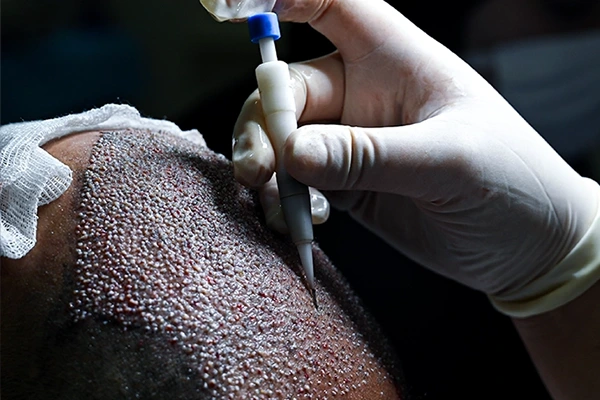
Hair transplantation using the DHI technique, “Direct Hair Implantation”, is one of the latest hair transplant techniques that rely on implanting follicles directly into the scalp without the need to open surgical channels as is the case with other traditional methods. This technique relies on the use of a special device known as the “Choi Pen”, which is a precise tool used to implant follicles individually in the targeted areas, allowing the doctor complete control over the angle, direction, and depth of the hair transplant.
Preparations required before DHI hair transplant:
- Stop taking certain medications such as anticoagulants and herbal supplements 7-10 days before the procedure.
- Abstain from smoking and alcohol for two weeks prior to surgery to improve blood flow and healing.
- Wash your hair well the day before the procedure using a medicated shampoo.
- Avoid caffeine on the day of surgery to reduce bleeding.
- Inform your doctor of any health conditions, especially allergies to medications or anesthesia.
How to perform DHI hair transplant:
The DHI hair transplantation process goes through several precise stages to ensure achieving the best possible results, and it includes the following steps:
Consulting and planning:
Before starting the procedure, the doctor conducts a comprehensive consultation to assess the patient's condition and scalp. The goals of the procedure are determined, the hair density in the donor area (from which the follicles are extracted) is examined, and the number of follicles required and the target areas for transplantation are determined.
Preparing for the operation:
The donor area (usually the back of the head) and the recipient area (the place where the hair will be transplanted) are properly prepared. The hair in the donor area is trimmed to small lengths to facilitate the extraction of the follicles. The scalp is also sterilized and the patient is given a local anesthetic to numb the target area and reduce pain during the procedure.
Extraction of follicles:
The doctor begins by extracting the follicles from the donor area using a very fine tool known as a “micro-drill”, which pulls the follicles individually without causing large wounds. The extracted follicles are stored in a special solution to maintain their vitality and quality until they are transplanted.
Preparing the bulbs:
The follicles are carefully prepared in a laboratory equipped to prepare individual follicles and placed in a special solution to maintain their vitality and quality. The medical team checks the number and quality of the extracted follicles to ensure that all the required follicles are implanted.
Follicle transplantation using Choi pen:
A special tool known as a “CHOI pen” is used to implant the follicles directly into the scalp without the need to open surgical channels in advance. This pen allows the doctor to determine the angle, direction, and depth of implantation for each follicle with great precision. Each follicle is placed individually in the targeted areas, taking care to achieve a natural density and distribution of hair.
Healing period and hair growth:
The recovery period after hair transplantation relatively short, and it usually takes only a few days for the small wounds resulting from the procedure to heal. The transplanted hair begins to fall out a few weeks after the procedure, which is completely normal, and then new hair begins to grow gradually over the following months. The final results usually appear after 6 to 12 months after the procedure.
Important tips after hair transplant using the DHI technique:
- Follow your doctor's instructions and take your prescribed medications.
- Avoid touching or scratching your scalp to avoid damaging the transplanted follicles.
- Sleep in a proper position. Sleep on your back with your head elevated to reduce swelling.
- Avoid strenuous physical activity and do not exercise vigorously for two weeks.
- Protect your scalp from the sun. Use a hat to protect your scalp from the sun.
- Use a medicated shampoo and wash the hair gently after 48-72 hours.
- Avoid hair products for two weeks.
- Keep follow-up appointments to check your healing progress.
Adhering to these tips helps improve hair transplant results and ensure the safety of the transplanted follicles.
Suitable candidates for DHI hair transplant:
DHI hair transplantation technique is suitable for a wide range of people, but there are some cases that are considered the most suitable for this procedure:
- People with partial or severe hair loss
- People looking for natural results and high density
- People with a good donor area
- Those with sensitive scalp
- People who do not want a complete haircut
- Those who wish to transplant facial hair or eyebrows
Possible risks and complications after DHI hair transplant and how to avoid them:
Some complications may occur, such as infection, swelling, bruising, pain, itching, loss of transplanted hair, crusting, or uneven hair growth.
To avoid these problems, it is recommended to follow the doctor's instructions, use antibiotics, keep the scalp clean, use cold compresses to reduce swelling, and avoid direct sun exposure. If any abnormal symptoms appear, a doctor should be consulted immediately.
The advantages and benefits you will get from hair transplant using the DHI technique:
- Natural and accurate results:
The DHI technique allows for the implantation of hair follicles with extreme precision using a “choi pen”, allowing the doctor to have complete control over the angle, direction and depth of implantation of each follicle. This contributes to achieving very natural results as the transplanted hair grows in the same direction and density as the original hair. - Reduce damage and recovery period:
Because DHI does not require surgical openings in the scalp, it reduces the size of the surgical wounds. This results in less pain, bleeding, swelling, and recovery time compared to traditional techniques such as FUE and FUT. The patient can return to their daily activities faster. - Higher hair density:
DHI allows for more dense implantation of follicles, allowing the doctor to place the hair follicles very close together, especially in areas that require dense coverage. This helps to achieve the appearance of fuller, more even hair. - No visible scars:
Because there is no need to open large channels or make wide incisions, DHI is less likely to cause visible scarring on the scalp. This is especially beneficial for people who prefer short hair or who are concerned about the appearance of surgical scars after the procedure. - Reduce follicle loss:
In the DHI technique, the follicles are implanted directly after extraction, which reduces the time they remain outside the body. This reduces the possibility of damage to the follicles and maintains their vitality, which increases the chances of success of the procedure. - Suitable for different hair types:
DHI technology is flexible and applicable to all hair types, whether the hair is thick or thin, or even curly or straight. - No need for a full shave:
In some cases Hair Transplantation Without Shaving can be performed for the entire head, making it a suitable option for people who do not want to change their appearance drastically, especially women.
Finally:
Ultimately, hair loss is not inevitable; it's a challenge with real and effective solutions available today. DHI hair transplantation is not just a medical procedure, but an investment in your self-confidence and appearance for years to come.
But always remember: the success of the procedure depends not only on the technique used, but also on choosing the right doctor and adhering to pre- and post-operative instructions. Before making any decision, take your time for a consultation, ask questions, and compare options because your hair deserves the best.
Are you ready to restore your hair and your self-confidence? The first step starts with consulting a specialist today.
 Arabic
 English