

Gastric Balloon
.
Have you ever thought about losing your excess weight without entering an operating room? That is exactly what the gastric balloon offers — a simple, non-surgical procedure that takes no more than 30 minutes, yet is capable of helping you lose 10-15% of your weight within just a few months.
With the growing prevalence of obesity and the failure of many to achieve results through diet and exercise alone, the gastric balloon has become an option that thousands turn to every year to break out of this cycle. In this article, you will find everything you need to know — from how the balloon works and its types, to life after the procedure and how to maintain your results.
What is a gastric balloon?
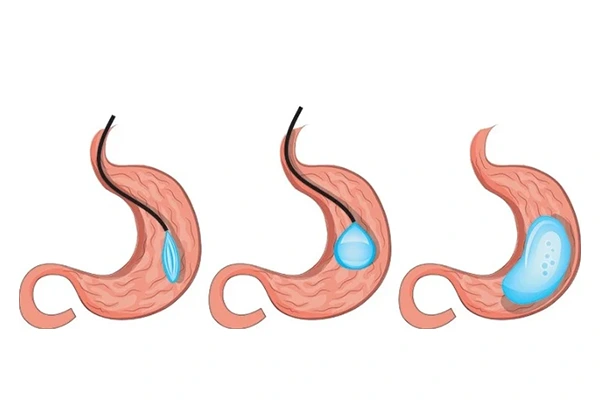
It is a medical device used as a non-surgical procedure to treat obesity, where a flexible silicone balloon is inserted into the stomach through the mouth using an endoscope. Once placed in the stomach, the balloon is filled with a saline solution or air to occupy part of the stomach, which reduces the amount of food that can be consumed and promotes a feeling of fullness, thereby helping with weight loss.
What are the types of gastric balloons?
- Saline-filled balloon: The balloon is filled with saline solution with blue dye added to monitor leakage.
- Air-filled balloon: This is lighter than the saline balloon and is filled with air.
- Swallowable balloons: The capsule containing the balloon is swallowed and then filled after it reaches the stomach.
Who is the right candidate for the gastric balloon procedure?
- People who are obese are those who have a body mass index (BMI) between 30 and 40.
- People who have not been successful in losing weight through traditional methods: such as diet or exercise.
- People who do not want to have surgery: A gastric balloon is a non-surgical option compared to other weight loss procedures.
- People who have a commitment to lifestyle changes: The ideal candidate must be willing to commit to dietary changes and an exercise program to ensure success.
- People who do not have health problems that prevent the procedure: such as stomach infections or diseases of the digestive tract.
How is the gastric balloon procedure performed?
. The gastric balloon procedure is a non-surgical procedure and is considered a relatively simple outpatient procedure, where the patient typically does not need to be admitted to the hospital. It is carried out through organized steps that include:
Preparing for the procedure:
Before the operation, the patient undergoes comprehensive medical tests including tests and a physical examination to ensure his suitability for the procedure. The patient is also asked to fast for several hours before the operation to ensure that the stomach is empty.
Steps of the process:
- Anesthesia: The procedure begins with the patient being given a mild sedative or local anesthesia of the throat to avoid discomfort during balloon insertion.
- Internal theorizing: The doctor uses an endoscope (a flexible tube with a tiny camera on the end) to insert the deflated balloon into the stomach through the mouth. This tube allows the doctor to see the stomach and guide the balloon into the proper place.
- Filling the balloon: After ensuring that the balloon is in the stomach, it is filled with saline or air using a thin catheter connected to the balloon. The balloon is filled according to the pre-determined amount to reduce the size of the stomach.
- Catheter removal: After fully inflating the balloon, the catheter and endoscope are gently removed, leaving the balloon inside the stomach.
Duration of the procedure:
The procedure usually takes about 20-30 minutes. After the procedure, the patient remains in the clinic for a few hours for monitoring to ensure his condition is stable.
Recovery after surgery:
The patient may experience some side effects such as nausea or vomiting in the first days after the procedure, which are normal symptoms and gradually subside. Strict dietary guidelines are provided in the first days that must be adhered to.
Life after gastric balloon:
After the procedure, the patient begins to adapt to new lifestyle changes to ensure the success of the procedure. These changes include:
- Diet: Initially, limited to liquids, then gradually transition to solid foods, with small, balanced meals.
- Physical activity: It is recommended to start with light exercise and then gradually increase the intensity of the exercise to support weight loss.
- Psychological support: It is recommended to benefit from psychological support and change the relationship with food to avoid overeating.
- Medical follow-up: It requires continuous follow-up with a doctor and nutritionist to evaluate progress and avoid complications.
- Balloon removal: After 6-12 months, the balloon is removed using the same endoscopic procedure, and the patient continues to maintain a healthy lifestyle.
What happens after the gastric balloon is removed?
After the gastric balloon is removed, the patient faces an important phase of maintaining the weight lost during the balloon's presence. The stomach returns to its normal size, so following a healthy diet becomes essential.
It is recommended to continue eating small, balanced meals, focusing on healthy foods such as proteins and vegetables, while avoiding high-calorie foods.
In addition, the patient must continue to exercise regularly to maintain physical fitness and prevent weight regain.
What are the benefits of the gastric balloon?
- Effective weight loss: The gastric balloon helps reduce the amount of food that can be eaten, which leads to feeling full quickly and consuming fewer calories, thus achieving weight loss.
- • Non-surgical procedure: The balloon is one of the non-surgical solutions for weight loss, which reduces the potential risks associated with surgeries such as Gastric Sleeve or Gastric Bypass.
- Long-lasting results: With a healthy diet and exercise program after balloon removal, weight loss results can be long-lasting and continue for a period after balloon removal.
- Improved overall health: Weight loss resulting from the gastric balloon may improve health conditions associated with obesity such as type 2 diabetes, high blood pressure, and high cholesterol levels.
- Short recovery period: Since the procedure is performed using endoscopy and does not require major surgery, the recovery period is short, and the patient can return to daily activities quickly.
Frequently Asked Questions:
Here are the most frequently asked questions about this procedure:
Is the gastric balloon procedure painful?
The procedure itself is painless because it is performed under sedation or local anesthesia. After the procedure, the patient may experience some discomfort and nausea in the first few days; these are normal symptoms that gradually disappear within 3-5 days.
How long does a gastric balloon stay in place?
The balloon remains inside the stomach for 6 to 12 months depending on the type used, after which it is removed in the same way as endoscopy without the need for surgery.
How many kilograms can be lost with a gastric balloon?
It varies from person to person, but on average the balloon helps to lose 10-15% of total body weight during its time in place, with adherence to diet and exercise.
What is the difference between gastric balloon, gastric sleeve surgery, and gastric Botox?
The balloon is a temporary, non-surgical procedure that is removed after 6-12 months. Gastric sleeve surgery, on the other hand, is a permanent surgical procedure with better results but higher risks.(Gastric grafting, like the balloon, it is non-surgical but has less long-term impact.
Can the gastric balloon procedure be repeated?
Yes, in some cases a new balloon can be inserted after the first one is removed, but a doctor should be consulted to assess the situation and determine if it is appropriate.
Is the gastric balloon suitable for everyone?
No, there are cases where the balloon is not recommended, such as patients with peptic ulcers, gastrointestinal diseases, or those who have previously undergone gastric surgery. Therefore, a prior medical examination is necessary.
Can a gastric balloon burst?
The risk of bursting is very rare because the balloon is made of high-quality silicone. However, if a leak occurs, you will notice your urine turning blue, which is an early warning sign that requires immediate medical attention.
Finally:
If you're looking for an effective weight loss solution without resorting to surgery, the gastric balloon may be the right option for you. Thousands of people worldwide have achieved significant results with this procedure, not only in terms of weight but also in their overall health and quality of life.
What's next? Consult your specialist doctor today to assess your condition and find out if a gastric balloon is the right option for you, because every case is different and there is no better decision than one based on a specialist's opinion.
 Arabic
 English