

FUE Hair Transplant
.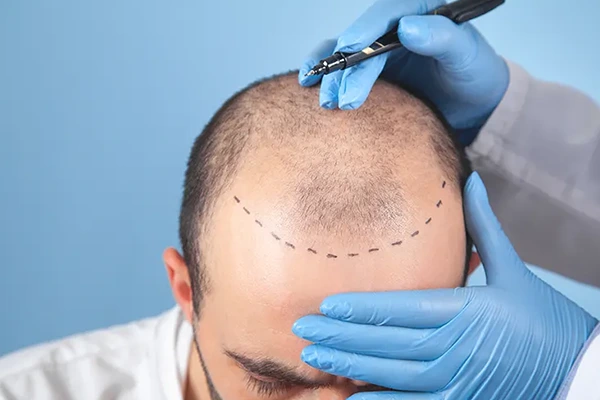
Have you started noticing a receding hairline or thinning patches on your scalp? Hair loss is a problem that affects millions, but a solution is now within reach. The FUE (Follicular Unit Extraction) technique has completely revolutionized hair transplantation, eliminating large incisions, visible scars, and a long recovery period. Just natural-looking results that restore your hair and your self-confidence. If you're considering this step, this article is your comprehensive guide to everything you need to know.
What is FUE?
Follicular Unit Extraction (FUE) is one of the newest and most popular hair transplant techniques. It emerged in the 1990s as an advanced alternative to traditional surgical techniques, and its tools have developed significantly, making it the first choice for many patients and doctors today.
It involves extracting individual hair follicles from the donor area using a very precise instrument, then implanting them into the affected areas with high accuracy. Unlike the traditional Follicular Unit Transplantation (FUT) technique, FUE does not require large surgical incisions, meaning less scarring, less pain, faster recovery, and natural-looking results that blend seamlessly with your existing hair.
Preparations necessary before hair transplantation using the FUE technique:
- Consult a specialist doctor to evaluate the condition of the hair and determine whether the technique is appropriate.
- Stop taking some medications like blood thinners, after consulting with your doctor.
- Stop smoking and drinking for two weeks before the procedure to improve circulation and healing.
- Avoid dietary and herbal supplements that may cause bleeding.
- Showering and washing your hair well the day before or on the morning of the procedure.
- Wear comfortable clothing and avoid clothing that may rub against the scalp after the procedure.
Steps for the FUE Hair Transplant Technique:
- Diagnosis and Assessment:
The doctor begins by evaluating the patient's condition by examining the scalp and hair, identifying the donor and recipient areas, and ensuring that the patient is suitable for the FUE hair transplant procedure. - Preparing the donation area:
The hair in the donor area (usually the back or side of the scalp) is shaved to a very short length to facilitate the extraction process, then the donor area is sterilized and locally anesthetized to avoid any pain during the extraction process. - Extraction of follicles:
Using a fine instrument (usually between 0.6 and 1.0 mm in diameter), the doctor extracts the follicles one by one from the donor area. Each follicle is carefully collected to ensure that it remains intact and healthy. - Preparing the receiving area:
After collecting the follicles, the doctor prepares the recipient area by making small holes using fine needles in the places where the follicles will be implanted. - Follicle transplantation:
The extracted follicles are carefully and precisely implanted into the holes prepared in the recipient area to ensure their natural distribution and consistency in the direction of hair growth with the existing hair. - Post-operative care:
After the transplant is completed, the patient is given clear instructions about post-operative care, such as how to clean the transplanted area, prescribed medications, and tips to avoid activities that may affect the result. - Monitoring and surveillance:
The patient must follow up with regular check-up appointments with the doctor to monitor progress and ensure obtaining the best possible results, while verifying that the healing process is going well.
Important tips to ensure a quick recovery and good results after FUE hair transplantation:
after hair transplantation follow these instructions to achieve satisfactory results:
- Avoid touching or rubbing the transplanted area.
- Sleep at a 45-degree angle to reduce swelling.
- Avoid strenuous physical activities for two weeks.
- Avoid direct sun exposure.
- Avoid using chemical hair products.
- Drink enough water.
- Following a healthy and balanced diet.
- Abstain from smoking and alcohol.
- Regular check-ups with the doctor.
Benefits and advantages of hair transplantation using the FUE technique:
- Natural looking results:
The FUE technique allows for the precise distribution of follicles, providing a natural appearance for new hair that blends with the original hair. - No visible scars:
FUE technique does not leave large scars on the scalp, because it depends on extracting hair follicles individually without the need to cut a strip of skin. - Reduce pain and speed recovery:
FUE is less painful than traditional methods, and recovery takes less time, allowing the patient to return to daily activities quickly. - Flexibility in choosing the donor area:
Grafts can be harvested from several different donor areas, providing greater flexibility for the patient and doctor in determining the most suitable area. - Reducing the risk of infection:
Because there are no large incisions, the risk of infection and complications is lower compared to other surgical techniques. - Suitable for many hair loss conditions:
FUE can be used to treat many types of hair loss, including hereditary hair loss or hair loss resulting from injury or scarring. - Possibility of hair transplantation in other areas:
In addition to the scalp, FUE technology can be used for hair transplantation in other areas such as eyebrow and beard transplants..
Potential risks and challenges of FUE technique and its solutions:
Despite the benefits of the FUE technique, some patients may experience temporary symptoms after the procedure such as swelling, redness, and itching of the scalp. These are normal symptoms that are treated with anti-inflammatory drugs and painkillers prescribed by the doctor.
Some patients may also notice temporary shedding of transplanted hair during the first few weeks, known as“transplant shock”,which is completely normal and is followed by hair regrowth, which can be enhanced using topical treatments such as minoxidil or prescribed medications.
If the expected results are not achieved, the doctor can be consulted about additional sessions or appropriate complementary treatments.
Finally:
FUE technology is not just a solution for hair loss; it's a step towards regaining your confidence naturally and safely. With precise tools and proven results, achieving thick, natural-looking hair is easier than ever. All you need is a consultation with a specialist who will assess your condition and guide you towards the results you deserve.
 Arabic
 English