

Eyelid Lifting
.
One glance in the mirror can sometimes make you feel like your eyes no longer reflect who you truly are. The exhaustion you never felt, the heavy lids that have become a permanent shadow over your gaze, the puffiness that no concealer or deep sleep can hide — small details, yet they make all the difference in how you look and how you feel.
Eyelid lifting, medically known as Blepharoplasty, is more than just a cosmetic procedure — it's a way to restore the frame your eyes deserve. In this article, we'll take you on a complete journey: from the reasons that drive people to make this decision, to everything that happens on the operating table and beyond.
What is Eyelid Lifting?
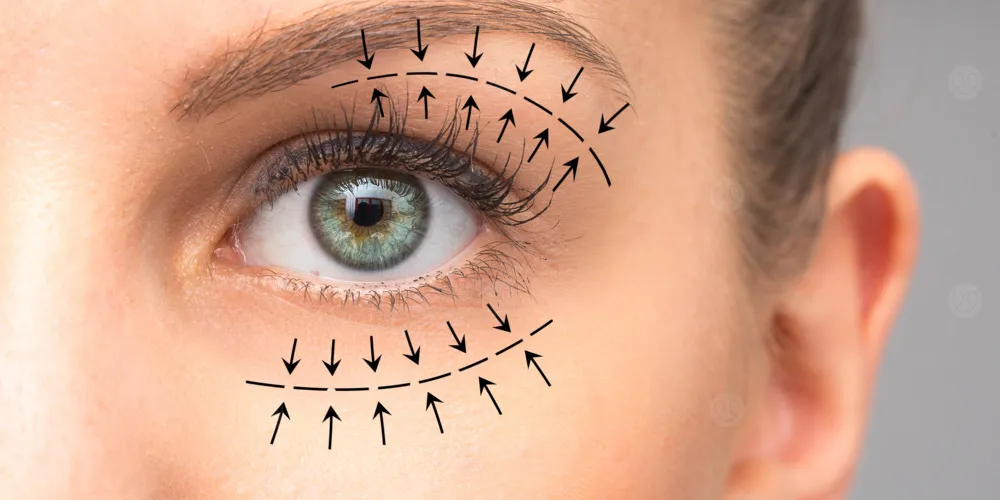
Eyelid Lifting It is a cosmetic surgical procedure in which excess skin, fat, and sagging muscles are removed from the upper or lower eyelids, with the aim of improving the appearance of the eyes and making them appear more youthful and refreshed.
The procedure can be performed on the upper eyelid only by removing excess skin that causes the upper eyelid to droop or affects vision, or it can be performed on the lower eyelid only by removing fat and puffiness under the eyes, which give the appearance of “under-eye bags.” Or both together, depending on the person’s needs.
Why Do People Choose Eyelid Lifting?
The reasons are many, but they all come down to one thing: looking in the mirror and seeing yourself — not the exhaustion you never felt.
1. Your Eyelids Reveal What You Don't Feel
Over time, skin accumulates over the upper eyelid weighing it down, and under-eye puffiness appears that has nothing to do with how many hours you've slept. The problem isn't how you feel — it's how you look. Eyelid lifting corrects that equation.
2. Sometimes the Problem Is Medical, Not Cosmetic
When the upper eyelid droops excessively, it begins to narrow your field of vision. In these cases, the procedure isn't a luxury — it's a necessity that genuinely improves your daily life.
3. Some Cases Are Genetic
Not everyone who suffers from eyelid puffiness or drooping is in their fifties — some people inherit these traits and deal with them from an early age. In these cases, surgery is a solution, not an overreaction.
4. Self-Confidence Is Not a Small Detail
When the way you see yourself in the mirror changes, so does everything else — the way you speak, the way you carry yourself, and how others perceive you. That alone is reason enough.
Who Is a Good Candidate for Eyelid Lifting?
- People who are in good general health and do not suffer from serious chronic diseases.
- Non-smokers or those able to stop smoking for a period before and after surgery.
- Those who suffer from droopy or sagging eyelids, whether due to aging or genetics.
- Those with a medical reason, such as a drooping eyelid that narrows the field of vision and affects daily life.
How to prepare for eyelid surgery:
Preparing for eyelid lifting starts with a consultation with a specialist plastic surgeon to assess your condition and determine whether you're a suitable candidate. Your doctor may request medical tests to ensure there are no health issues that could affect the surgery or recovery. You'll need to stop taking medications that may increase the risk of bleeding, such as aspirin, and quit smoking before the surgery to improve the healing process.
It's important to align with your doctor on realistic expectations from the procedure. You should also prepare for the post-surgery period by setting up a comfortable space at home and arranging help from someone close to you. If the surgery is performed under general anesthesia, fasting for a few hours beforehand is recommended.
Steps of the eyelid lifting process step by step:
Eyelid Lifting typically follows several key steps:
Anesthesia:
The procedure starts with anesthesia, either local anesthesia with sedatives or general anesthesia, depending on your health condition and the doctor's recommendations.
Surgical incision:
The surgeon makes small incisions in the upper or lower eyelid or both, depending on the need of the case. The incision is made in places that are almost invisible, such as the natural creases of the eyelid, to avoid the appearance of scars.
Removing or redistributing fat and skin:
The surgeon removes or redistributes excess skin and sagging fat. In some cases, weak muscles around the eyes may be tightened to improve the appearance of the eyelids.
Closing the incisions:
After the excess tissue has been removed, the incisions are closed using fine sutures or skin adhesives. These wounds usually heal without leaving any visible scars.
Initial recovery period:
After the procedure, cold compresses or ointments may be applied to reduce swelling and bruising, and your doctor will instruct you on post-operative care.
The procedure usually takes one to two hours, depending on the condition and the extent of the procedure required. After surgery, you will need a short recovery period before returning to your daily activities.
What to Expect After Eyelid Lifting?
Recovery is easier than most people imagine — but it requires patience and attention to a few simple details.
Swelling and Bruising: Completely Normal
In the first days after the procedure, you'll notice swelling and bruising around the eyes — this is expected and nothing to worry about. They typically fade within one to two weeks. Cold compresses will be your best friend during this stage.
Wound Care
Your doctor will prescribe an antibiotic ointment and possibly eye drops. The golden rule: do not touch or rub your eyes during the first few days, even if you feel a slight itch.
Rest and Sleep
Sleep with your head elevated using an extra pillow — this alone significantly reduces swelling. Avoid any activity that raises blood pressure, such as exercise or repeated bending, during the first few days.
When Can You Return to Your Normal Life?
Most people return to their daily activities within 7 to 10 days,but strenuous activities require waiting a full 2 to 3 weeks >
Follow-Up Appointments
Don't skip your follow-up appointments — your doctor will examine the wounds and typically remove the stitches after a week. A few minutes that guarantee you a better result.
The Final Result Takes Time
You'll notice a clear difference within two weeks, but the final result settles after several months once the swelling completely disappears. Don't judge the outcome too early.
Tips for using cosmetics after eyelid lift surgery:
After eyelid lifting, it is recommended to wait around 10 to 14 days before using makeup to avoid any irritation or infection. When resuming makeup, choose gentle and hypoallergenic products, and avoid pulling or rubbing the skin around the eyes.
It's best to avoid waterproof eye products during the first few weeks to prevent difficulty removing them. Use gentle makeup removers and wipe the area carefully to avoid irritation or damaging the eyelids during recovery.
Non-surgical alternatives to eyelid tightening:
For those who would prefer to avoid surgery, there are several non-surgical alternatives that can help improve the appearance of the eyelids.
Laser therapy:
Eyelid Lifting with Laser It helps reduce wrinkles and sagging. Laser works by stimulating collagen production in the skin, leading to improved skin elasticity and tightening of the area. Laser results are gradual and require repeated sessions to achieve the best outcome.
Filler injections:
Dermal fillers such as hyaluronic acid can be used to fill areas of lost volume under the eyes or around the eyelids. Filler injections help temporarily reduce the appearance of dark circles and puffiness, giving the eyes a more youthful appearance.
Botox injections:
Botox is used to reduce fine wrinkles around the eyes (such as frown lines or wrinkles between the eyebrows) by relaxing the muscles that cause these wrinkles. The effect of Botox lasts for a few months, after which the injections can be repeated.
Although non-surgical alternatives can significantly improve the appearance of your eyelids, their results are temporary and usually require repeated sessions. If you are looking for a more permanent, comprehensive solution, surgery may be the right option.
Are the results of eyelid lift surgery permanent?
The results of eyelid surgery are long-lasting, but not completely permanent. The surgery helps remove excess skin and sagging fat, and these results usually last for 5 to 10 years or more, depending on the person and several factors such as age and lifestyle.
However, the natural aging process continues after surgery, which means that the skin may sag again over time, especially if skin care is not taken care of or if there are factors such as excessive sun exposure or smoking. But in general, most people who undergo eyelid lift surgery are very satisfied with the results for a long time.
If you're looking to enhance your appearance more comprehensively, also check out Facelift andArm Lift.
Finally:
Your eyes are the first thing people notice about you, and the last thing you forget when you look at yourself. If droopy eyelids or under-eye puffiness have been stealing that look from you, eyelid lifting may be the step you've long been considering.
The results are long-lasting, the recovery time is shorter than you'd imagine, and the difference it makes to your appearance and self-confidence is far greater than the size of the incision.
The first step is simple — consult a specialist who will evaluate your condition and answer all your questions. From there, the decision is yours.
 Arabic
 English