

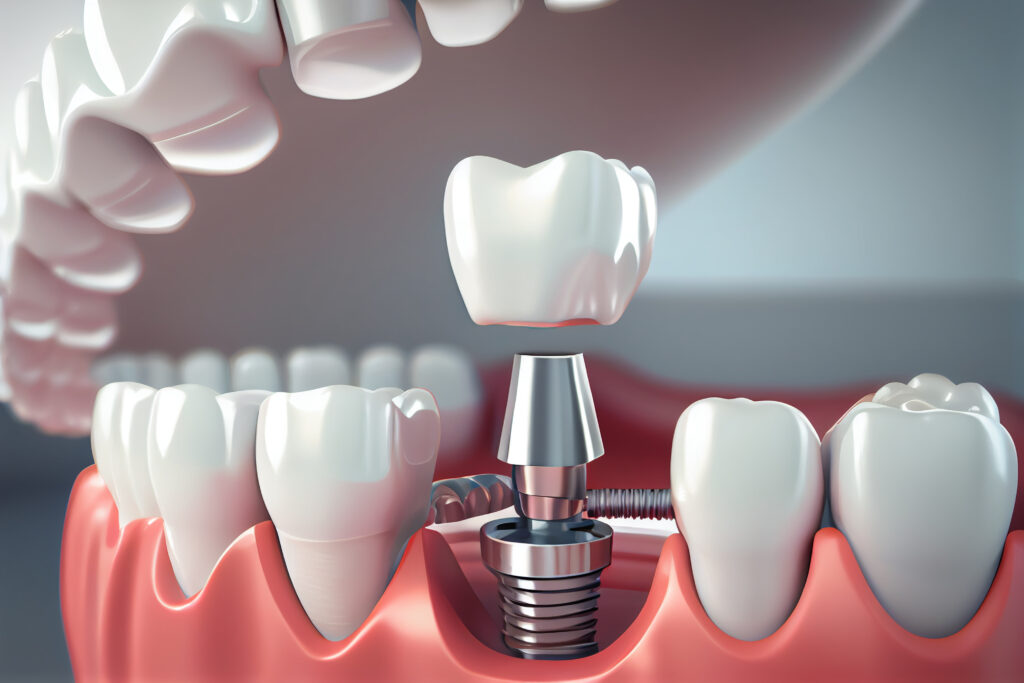
Are you suffering from tooth loss and looking for a permanent, effective solution? Traditional dentures are no longer your only option. With the great advances in dental medicine, dental implants have become the ideal solution that gives you teeth that look and function just like natural ones.
In this article, we will take you on a comprehensive journey where you will learn everything you need to know about dental implants, from preparing for the procedure and its steps, all the way to how to care for them to achieve the best possible results.
What Are Dental Implants?
Dental implants are a medical procedure aimed at replacing lost or damaged tooth roots with metal supports that resemble screws. An artificial tooth is placed on top of these supports, making it look and function like a natural tooth. This procedure is considered an ideal alternative to dentures or dental bridges that may not fit well in the mouth, providing an excellent option for people whose natural tooth roots do not allow for dentures or the replacement of dental bridges.
Dental implants are the best and latest way to replace missing teeth, as they don’t affect the surrounding teeth and tissues at all, making them a suitable option for many people.
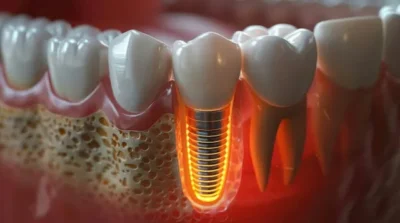
How to prepare for a dental implant procedure:
Good preparation for a dental implant procedure is a key step to ensure the success of the operation and a quick recovery. It starts with a comprehensive assessment of the patient's mouth and overall health. It's essential for the patient to fully cooperate with their doctor at this stage. Here are some preparatory steps you might be asked to take before the procedure:
- Comprehensive medical check-up
The doctor will do a thorough examination of your mouth and take X-rays of your teeth and jaw to pinpoint the best spots for dental implants. You might also need some blood tests to make sure there aren’t any health issues that could affect the healing process. - Improving oral health
Before getting dental implants, your oral health needs to be in good shape. The dentist might ask you to get a professional cleaning and take care of any cavities or gum infections. Keeping your mouth super clean lowers the risk of infection and helps the implants heal faster. - Quitting smoking:
Smoking can negatively affect the dental implant process and slow down healing. It's advised to quit smoking well ahead of the procedure to ensure the best results. - Following a healthy diet
Eating a balanced diet rich in essential vitamins and minerals helps improve oral and overall health. It's often recommended to take certain dietary supplements to boost bone and gum strength. - Review of current medications
You should inform the doctor about all your medications, including dietary supplements and over-the-counter drugs. You might need to adjust the doses of some medications or stop taking some before the procedure. - Mental preparation
It's normal for a patient to feel a bit anxious before the surgery. You should talk to your doctor and ask any questions you have to ease your stress. Also, knowing what to expect during and after the procedure can give you a sense of comfort and confidence.
By following these tips and being well-prepared, you can boost your chances of success with dental implants and achieve the best possible results.
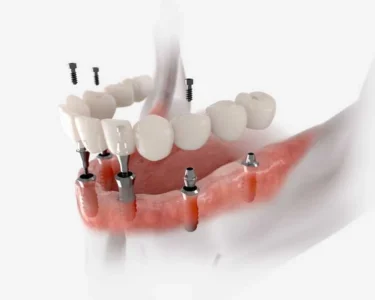
Basic steps of dental implantation process ::
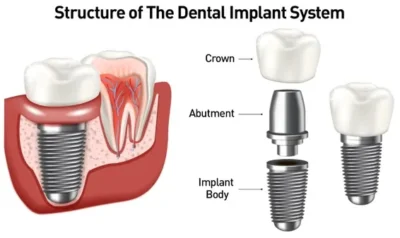
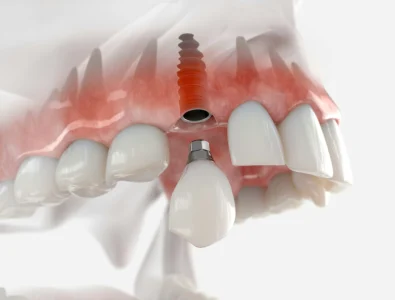
The dental implant procedure consists of 4 main components that work together to give you an artificial tooth that looks and feels completely natural:
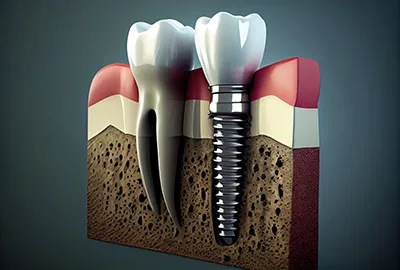
The Implant Body (The Artificial Root)
It is the beginning and the foundation of everything. It is made of high-quality titanium metal, a completely safe material that is fully compatible with the human body. It is surgically inserted into the jawbone to replace the root of the missing tooth, and over time it fuses with the bone in a process known as "osseointegration," giving it strong and long-lasting stability. Its size and diameter vary from case to case depending on the location of the missing tooth and the density of the available bone.
Cover Screw
After placing the implant body, a small screw called the cover screw is placed on top of it. Its function is to protect the implant during the initial healing phase and prevent any tissue from growing inside it.
Healing Abutment
Once the implant begins to fuse with the bone, the cover screw is replaced with a healing abutment. This temporary cover helps the gum tissue heal and form correctly around the implant, in preparation for placing the final tooth.
The Prosthetic Component (The Artificial Crown)
It is the final visible dental crown that is placed on top of the implant after the healing is complete. It is specially designed to match the shape and color of your natural teeth, so that no one can tell the difference between it and your original teeth.
Maintaining dentures:
To ensure that your dentures and remaining natural teeth last longer, it is recommended to adhere to the following guidelines:
- Visit your dentist regularly: Scheduling regular dental checkups helps ensure the safety and health of your implants.
- Practice good oral hygiene: It is recommended to follow professional cleaning procedures on a regular basis. Keep the implants, artificial teeth, and gum tissue clean just as you would with natural teeth. Use specially designed brushes to clean the corners and gaps around the teeth, gums, and metal abutments.
- .Avoid harmful habits: You should quit smoking to avoid dark stains on your teeth, and limit your consumption of caffeine products. You should also avoid chewing hard objects such as ice and hard candy to avoid breaking crowns or natural teeth.
Also learn about our Teeth Whitening service and how it gives you brilliantly white teeth in no time.
Benefits of dental implants:
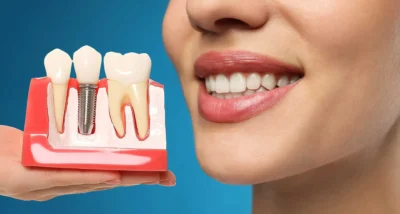
Dental implants have many benefits that make them a popular choice for people who have lost their teeth, including:
- Natural appearance: Dental implants resemble natural teeth in appearance and function.
- Improve oral function: Dental implants help improve the ability to chew and speak normally.
- SustainabilityWith good care, dental implants can last for many years, even decades.
- Comfort: Dental implants provide greater comfort compared to removable dentures.
Who is the ideal candidate for dental implants?
Dental implants are a good option for people who:
- They have lost their natural teeth due to decay or injury.
- Those who have good oral health and have enough jawbone to support the implants.
- They do not suffer from chronic diseases that may affect the healing process.
- They adhere to good oral hygiene habits and want to improve the appearance and function of their mouth.
Finally:
Dental implants are considered one of the most advanced medical procedures in the field of dentistry, providing a permanent and effective solution for replacing missing teeth. Thanks to modern technology, this procedure has become safer and more effective, helping many people regain their self-confidence and improve their quality of life.
If you are considering dental implants, it is important to consult a specialized dentist to evaluate your condition and provide you with the appropriate advice.
 Arabic
 English